
Stigmochelys pardalis | Leopard Tortoise
Names: Phil & Burt (males)
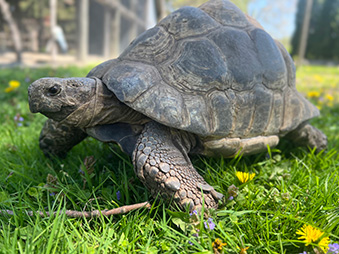
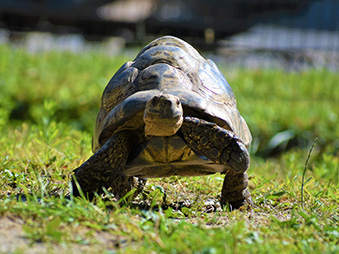
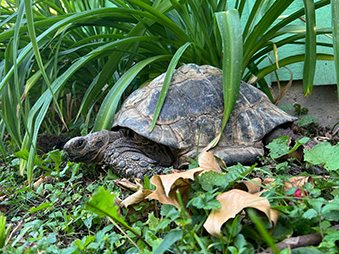
Leopard Tortoise: The Spotted Tank of the Savanna
Leopard tortoises are one of Africa’s largest and most recognizable tortoise species. Their high-domed shells—called carapaces—display striking black-and-yellow patterns that resemble a leopard’s spots. Calm, sturdy, and steady, these tortoises spend their days grazing, exploring, and shaping the landscapes they inhabit.
At the zoo, Phil and Burt enjoy warm days in The Outback, where guests can often spot them cooling off under the sprinkler—one of their favorite summertime activities.
Where They Live
Leopard tortoises roam the dry savannas of Sudan, Ethiopia, Tanzania, Angola, South Africa, and neighboring regions. Their preferred habitats include:
- Dry Savannas
- Grasslands
- Shrublands with low vegetation
- Semi-arid plains
They avoid damp, cold environments, which they do not tolerate well.
Because these ecosystems experience scorching days and cool nights, leopard tortoises are crepuscular, active mainly in the early morning and late afternoon. During the heat of the day, they shelter under shrubs or in abandoned burrows; at night, they settle early to avoid the chill.
Built-In Armor & Superpowers
Leopard tortoises are strong, well-protected reptiles with shells fused to their spine—living structures that grow throughout their lives. They lack teeth, relying instead on a sharp, beak-like mouth to bite and tear food.
Key adaptations include:
- Excellent sense of smell for finding food.
- Ability to sense vibrations despite lacking external ears.
- Internal water storage sacs that help them survive long dry periods.
- Bold juvenile shell patterns that gradually fade with age.
Although they cannot withdraw entirely into their shells, their thick, domed armor provides impressive protection.
Family Life: Slow and Steady
Leopard tortoises are oviparous, laying soft, leathery eggs that harden as they develop. Their breeding season runs May–October.
Nesting & Development
- Females dig nests 10–30 cm deep and lay 5–30 eggs per clutch.
- Larger females may lay 5–7 clutches per season, roughly 3–4 weeks apart.
- Eggs incubate for 9–12 months, one of the longest incubation periods among reptiles.
- Temperature determines sex:
- Hotter nest = females
- Cooler nests (<30°C) = more males
- Hatchlings emerge fully independent.
Maturity & Behavior
- Males reach sexual maturity around 5 years; females likely mature later.
- Males compete fiercely, ramming, butting, and sometimes flipping rivals—or even females—during courtship.
- Males are surprisingly vocal, using calls to attract mates and challenge competitors.
- Courtship may begin only after males follow females for days or even weeks.
Predators & Defense Tricks
A fully grown leopard tortoise is well-protected; only humans pose serious threats. Hatchlings, however, face high mortality—up to 80% fall prey to foxes, coyotes, mongooses, and other predators.
As a last-ditch defense, a leopard tortoise may “flush” when picked up, releasing stored water and waste to discourage predators.
Ecosystem MVP
Leopard tortoises are vital grazers in the savanna ecosystem. Their feeding habits support:
- Biodiversity – keeping plant communities balanced
- Seed dispersal – spreading seeds as they roam
- Nutrient cycling – processing tough plant material and returning nutrients to the soil
With lifespans of 80–100 years, they can influence their ecosystem for generations.
Not a Pet
Despite their charm, leopard tortoises make poor pets. They require:
- Large spaces to roam
- Specialized diets and supplements
- Strict environmental and lighting control
- Highly knowledgeable veterinary care
- A lifetime commitment – 80 to 100 years or more
Many are surrendered to rescues when owners realize the difficulty of proper care. Wild-caught tortoises in particular suffer greatly.
Fact Sheet
Taxonomy
Genus: Stigmochelys | Species: pardalis |
Kingdom: Animalia | Phylum: Chordata | Class: Reptilia | Order: Testudines | Family: Testudinidae |
Favorite Enrichment Type
Garden hose showers! They like to cool off under the sprinkler on hot summer days!
Life Span
- In the Wild: 80 to 100 years
- In Human Care: 80 to 100 years
Diet
- In the Wild: Low-lying vegetation, berries, and fruits when available.
- At the Zoo: Fresh vegetables and fruit and graze on grass in the summer.
Geographic Range
Africa from Sudan to Ethiopia and from Natal to Angola and South Africa. They can also be found in some regions in southwestern Africa.
Habitat
Most live in shrubland and savanna habitats.
Fun Facts
- Soil temperature decides hatchling sex—hotter = female, cooler = male.
- They can store extra water in specialized sacs.
- Juveniles have the boldest patterns, which fade as they age.
- They cannot fully withdraw into their shells, but their armor is still highly protective.
- They’re walking gardeners, spreading seeds everywhere they go.
- They may hiss when retracting suddenly into their shells.
Status: Least Concern
How You Can Help
- Never buy wild-caught tortoises.
- Say NO to the exotic pet trade.
- Visit AZA-accredited zoos and aquariums that prioritize responsible animal care.
- Educate others about why wild animals don’t belong in private homes.
- Check out the Not-a-Pet campaign to learn more!
How to Find Us
Come see our Leopard tortoises, Burt and Phil, along with their friends at the Outback Habitat, located between the miniature horses and the aviary!